
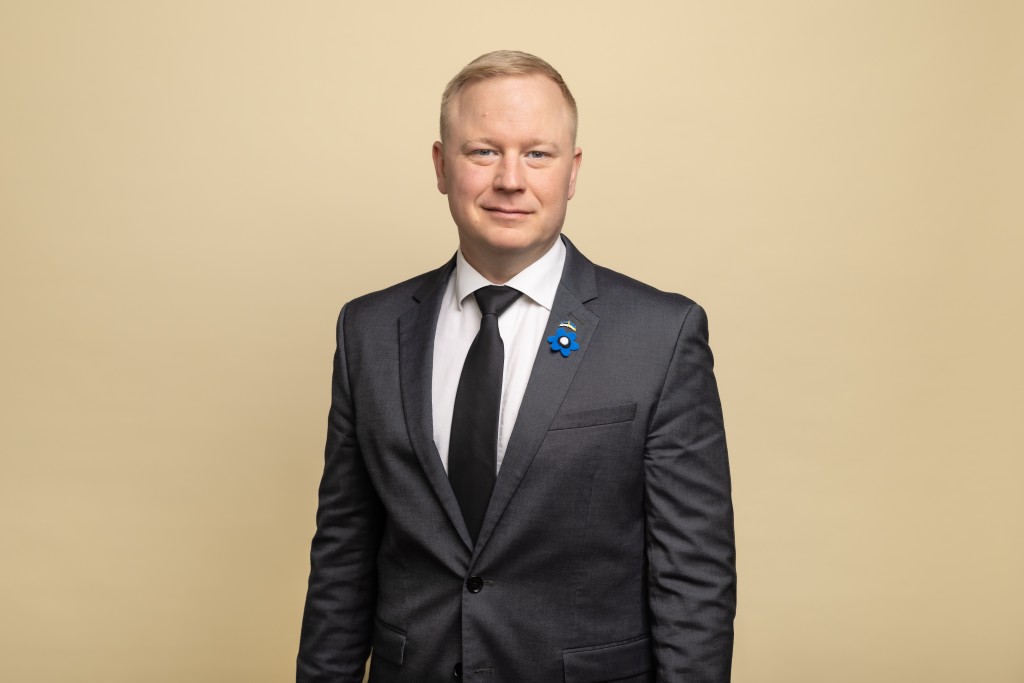
According to the Minister of Finance Mart Võrklaev, next year’s budget represents a step towards a more stable future:
‘When drafting the state budget for 2024, the government had two choices: either increase the state’s loan debt to cover the growing budget deficit with new loans or continue to be a self-sufficient state with independent and sound public finances. As a new government, we unanimously agree that as a state we can no longer afford to postpone addressing this ever-growing issue. Thus, we must immediately make decisions in this budget that balance revenue and expenditure. The most important tax and austerity decisions for the 2024 state budget were made at the beginning of the summer, shortly after the new government took office.
Next year’s state budget is responsible and forward-looking. The focal points of both the state budget and the four-year budget strategy are Estonia’s national defence (both military and broad-based), economic growth through green reforms and sustainable public finances, and support for Ukraine.
Due to Russia’s full-scale military aggression in Ukraine, Estonia faces its most challenging security situation since the restoration of independence. Consequently, we are increasing our defence expenditure to reach 3% of GDP, and in 2024 it will exceed 3.2% of GDP. This means that we are contributing 5.6 billion euros to national defence over four years. To strengthen broad-based security, the Government Office has drawn up an action plan in co-operation with the ministries, and we will allocate tens of millions of additional funds for its implementation over the next four years.
Our security guarantee is also bolstered by our support of Ukraine, achieved through large international funds, the European Union budget as well as directly through the state budget. Every euro we contribute to ending the war in Ukraine and rebuilding the country will yield significant returns for the Estonian economy in the future.
It is true that the Estonian economy is not in its best shape at the moment, but one of the key pillars of its growth is sound public finances. The issue with our public finances is more long-term and started even before the crises. During the period of strong economic growth, when the growth rate was 4–5%, the budget was allowed to incur a structural deficit. This would have been a good time to improve the budget position and build up reserves.
Starting from 2020, when the COVID-19 crisis began, the budget of the Estonian general government sector has gone further into deficit. While the crises have led to an increase in expenditure, the suspension of EU budgetary rules has also made it possible to take additional expenditure decisions without having to find a source to cover these expenses. Therefore, today’s challenging state of public finances cannot solely be attributed to the years of crisis, but also to delayed decisions.
Consequently, we have now reached a situation where in order to achieve the established objectives, the basic law on the state budget must be amended, as the framework of the budgetary rules was devised prior to the years of crisis and therefore it no longer addresses the actual needs for ensuring fiscal discipline during and after major crises. With that in mind, we want to bring budget balance rules fully into line with European Union rules.
The budgetary rules should be feasible for the state and contribute to the enhancement of public finances. The structural deficit of the 2024 budget will remain at the same level as in 2023, ie -1.2% of GDP with a nominal deficit of -2.9% of GDP. In the spring, prior to the new government’s budgetary policy decisions, these figures stood at -2.6% and -4.2% of GDP, respectively. Therefore, with the 2024 budget we can improve the state of the public purse by approximately 500 million euros, a significant improvement in one year, largely thanks to the tax and austerity decisions made at the beginning of the summer. From 2025 onwards we aim to maintain a structural budget position of -1% of GDP or better.
A balanced budget cannot be achieved solely through robust economic growth, as rising costs go hand in hand with a growing economy. The required increase in GDP is too great for such a budget improvement to be achievable solely through economic growth. Thus, climbing out of a deep financial hole requires difficult decisions and revenue increases. According to the summer forecast, without these decisions the Estonian state would have to pay 480 million euros in loan interest alone in 2027. This could instead be used to benefit the Estonian education, economy and people.
The first major decisions, which will have a notable positive impact on the 2024 budget, were publicly discussed and adopted at the beginning of this summer, so that society has time to consider and adjust to them. We made family benefits more affordable for the state, resulting in savings of more than 500 million euros between 2024 and 2027. The tax changes adopted before the summer marked the first major steps towards bringing public finances in order and bolstering Estonia’s defence capability. The additional revenue generated by the tax changes that have already entered into force will amount to nearly 800 million euros over the next four years. From this amount, nearly 300 million euros will already be reflected in next year’s budget when the value added tax (VAT) is set to increase from the current 20% to 22%.
In addition to tax increases, there is also a strong emphasis on fair competition, ie smart and efficient collection of taxes. To this effect, we will streamline tax supervision, improving the collection of both income tax and VAT, which will result in an annual addition of 15 million euros to the budget.
To identify additional savings and revenue sources for next year’s budget, all ministries made an extra effort by reviewing their respective areas of government to identify the necessary activities for organising the system and services. Further savings will be introduced through the zero budget and budget revision, which will be carried out gradually in co-operation with ministries and agencies over a span of four years. The Ministry of Finance, the Ministry of Social Affairs and the Ministry of Economic Affairs and Communications, which collectively oversee more than half of the state budget, will be the first to review their services and assess their necessity and effectiveness. We must move towards a more needs-based and cost-effective use of public finances.
With the 2024 budget we not only address the substantial budget deficit but also direct a significant amount of money to investments aimed at implementing green reforms and stimulating the economy. Investments in vital infrastructure of the economy, such as railways, non-motorised traffic routes, public transport and highways, hold significant importance. The billions in support the European Union has allocated to Estonia will be of great help in this regard. In the upcoming year, we will funnel 1.9 billion euros into the economy through investments and investment support.
In addition, our goal is to be a smart nation in regard to research, development and innovation, which will also contribute to the growth of our economy. To achieve this, competitive salaries for school and university teachers as well as secure funding for research, development and innovation are necessary. In next year’s budget, 25 million euros are allocated for increasing teachers’ salaries. One of the government’s priorities is the transition to Estonian-language education, for which an additional 27 million euros have been allocated in the budget over the next four years. We are now allocating 71.9 million euros annually to support the transition to Estonian-language education. Furthermore, we direct more than 20 million euros annually to investments in basic IT infrastructure and cybersecurity of Estonia as a digital state.
In conclusion, if our fixed expenses and revenues are balanced, wisely targeted and needs-based, we can also make smart investments in our future using borrowed funds. We will persist in our efforts to straighten out the budget.
Thank you to everyone that contributed to the drafting of the 2024 budget.
Together we can amend the state budget!’

